Wednesday, February 16, 2022

Becoming Mary Pickersgill


Blog 29

Becoming Mary Pickersgill


Mary Pickersgill?  Who is she? Why should I care? Tell her story? Why?

Those were the thoughts racing through my head when I was invited to tell Mary’s story at the Association of Lodging Professionals Conference in Baltimore this year.


I love Baltimore.  I was born in Baltimore. I started my teaching career in Baltimore.
There’s lots to love in Baltimore and wouldn’t it be nice to give the conference attendees a glimpse into what’s wonderful about Charm City?

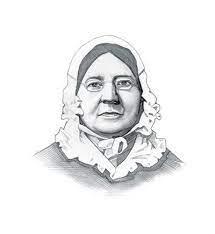
I was given 5-7 minutes to tell her story.Mary Young Pickersgill - Alchetron, The Free Social Encyclopedia

Mary Pickersgill was the woman who sewed the Star Spangled Banner – the one that is hanging in the Smithsonian’s American History Museum.  The flag that one sees upon entering that museum.  If you haven’t seen it, you really should. Everyone knows Betsy Ross, who sewed the first American Flag, but very few know of Mary Pickersgill.

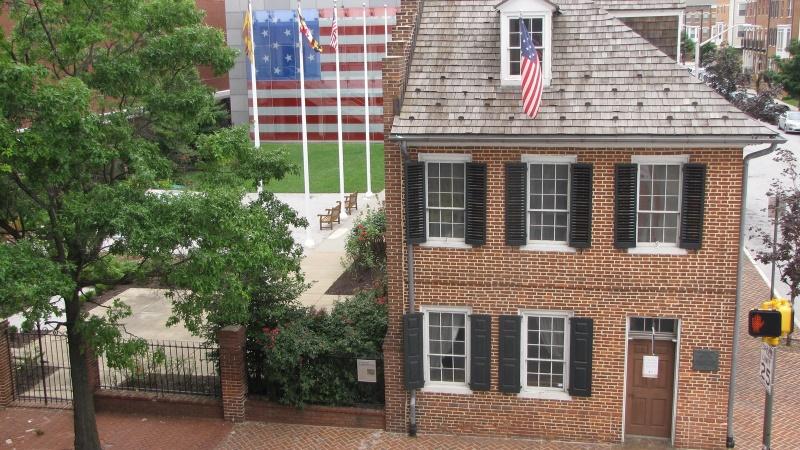
All good historical stories begin with research.  So I sat at my trusty computer and googled “Mary Pickersgill” to see what would pop up.  Truthfully, it wasn’t much, but it was enough for a start.  The most fruitful research was at the Flag House in Baltimore, which is where Mary Pickersgill lived and worked and created the flag that flew over Fort McHenry during the Battle of Baltimore in 1814.

Mary’s home has been beautifully restored to show us how she lived and where she worked.  It was a reality check on the conditions of her life rather than some romanticized picture of this woman’s life.  Life in Baltimore in the early 19th century was truly exciting because of the commerce brought to the city because of its Port.

Star-Spangled Banner Flag HouseHowever, it was also a time without central heat or indoor plumbing.

It was a time when infant mortality and maternal mortality were high. Children often didn’t live to become adults. Mary had 4 children.  Only one survived childhood to become an adult. Life expectancy was low. In the early 19th century in the US, the life expectancy was 29.  Mary was widowed at the age of 29.

As a widow, Mary needed an income to support herself and her daughter.  So, she came to Baltimore because of the Port and the opportunity it afforded her. When she was approached about making this flag, which was to be 30 X 42 feet, she said “yes.”

Mary and her daughter, 2 nieces, one indentured servant, and her mother created this flag during June and July, 1813, without the aid of a sewing machine, without electric lighting, without air conditioning, without indoor plumbing, all while wearing clothing that was restrictive and cumbersome to wear.

 As I learned about her, I was struck by her accomplishments later in life.  She earned enough from her flag making business to buy her home, as unbelievable accomplishment for her time.  But what really made me her biggest fan is her commitment to women, long before the suffragette movement had manifested.  As a widow, she understood the economic perils of living without a husband. So, she founded the first retirement home for widows and other desperate women. That first home is still in existence today in Towson, MD. Just recently, it was renamed as the Pickersgill Retirement Community.

Mary Pickersgill is one of our unsung heroes. It was a privilege to bring just a piece of her story to the conference.  The last lines of my piece were:
“There was this man, a lawyer from Frederick, MD…his name was Key…Francis Scott Key.  He wrote the most glorious poem about the flag still flying when the shelling had stopped. I hear tell it’s be set to music. Would you like to hear it?”
  

The crowd said, “Yes!”

I continued. “Ladies and Gentlemen, please rise for the United States Naval Academy Brass Quintet.” Sporting full dress uniforms, the musicians came on stage and played the “Star Spangled Banner.”   There were goose bumps, there were tears.  And for just a moment there was a swell of patriotism that defied the climate in which we find ourselves in 2022.

That’s why I tell stories.

My Legacy as a Singer

 Blog 28
My Legacy as a Singer

I am a Singer Feather Weight Portable Sewing Machine. The best of my kind at the time. I was compact and light, weighing only 12 pounds.  I had my own suitcase, and lots of attachments.  My best attachment was the button holer.  Put that thing on me and I could turn out perfect button hole after perfect button hole. I had templates for every conceivable size of button hole.
On August 5, 1950, I was gifted to Claiborne Trott, by her husband Merritt Trott, on the occasion of Claiborne Beth’s birth.  Things were very different then.  Men were excluded from the delivery room.  Mothers were often anesthetized to make the delivery easier for the doctors, and this birth was no different. Merritt expressed his outrage at the middle of the night delivery, but was told that gestation took exactly 9 months.
It wasn’t long before Clai put me to work.  She loved to sew. It was her creative outlet.  She made everything.  Beth’s clothes, her clothes, shirts for her husband and her son. Curtains for the house. Slip covers for the furniture. Doll clothes for the school bazaar.  She made everything she could because making one’s clothes was thrifty, and economical at the time.
 I could go at a thousand miles per minute.  Clai would stomp down on the foot pedal and I took off.  Sometimes I surmised that this was a frustration or perhaps an angry outlet for Clai. She always set me up on the dining room table so that her scowl and the sound of my roar were very, very public.
When Beth was 11 or 12, Clai decided it was time Beth learned to sew.  Beth wanted so many lovely store-bought clothes that were not in the budget.  But with me on her side, she could work magic, often sewing something so cool, so fashionable, that Beth would steal labels from her Nana’s clothes that were bought at Garfinkle’s, a very expensive, very exclusive department store in Washington, DC, and sew them in her own clothes.

Beth was really gifted at making clothes.  She made her own bathing suit, prom gowns, costumes for theatrical productions. You name it. She made it.
When Beth turned 21, Clai and Merritt gifted her a brand new, top of the line, portable Singer Sewing Machine.  It was much bigger and heavier than I.  It had a case that clamped on the sides for transport, not the protection of its very own suitcase. It had special stitches for making button holes, not an attachment. It could hem things with a blind stitch. I was abandoned. Clai was now working outside the home, and I stayed locked up for many, many years.
Fast forward to 1993.  Beth was married and had 2 sons.  Halloween was coming and Beth had promised the boys she would make their costumes every year.  In 1993, she was running out of time.  Clai brought me out of the closed and took me to Beth’s house, where mother and daughter sat at opposite ends of the dining room table sewing frantically.  Clai was making a pirate’s costume, while Beth worked on a dinosaur. The buzzing of the 2 machines was music to my ears. The costumes were fabulous.
Fast forward to 2010.  Clai passed on to what ever is next for humans leaving me, her beloved Singer Feather Weight Portable Sewing Machine, behind. I went to live with Beth.  Beth wasn’t making clothes anymore.  It wasn’t economical anymore, and in fact, was a bit of a luxury.  Besides, Beth still had her 1971 machine.  But that 1971 machine hadn’t held up as well as I. Beth could not count on her machine to make the beautiful, precise stitches that were so necessary to any project. It couldn’t keep the right tension on the needle anymore. She kept getting it repaired, until that guy retired. There was nowhere for her to turn. Thankfully, she had already taken me for a much-needed tune-up and I was ready to rock and roll.
And then she was asked to perform a sacred duty. Beth was asked to make the quilt for the newest grandchild.
Finding the right fabric was challenging. Fabric stores are no longer plentiful. There were trips to the local Hobby Lobby and Walmart.  There were trips to a JoAn’s Fabrics 100 miles away.  There was a quilt store not far from where this newest grandchild lived…483 miles from Beth.  It was there that the right fabrics came together.

After Beth had decided on a pattern and cut the fabric, she brought me out of hiding. It was so lovely to be out in the fresh air and the light, being put to work, knowing I was useful and had shown up that younger machine. I still purred like a kitten. My stitches were perfect and even.

As much as I would like to claim that I did the quilting as well as the piecing, I cannot.  I am too small to handle the size of quilts and such.  And as much as Beth would like to claim that she quilted it by hand, she can’t.  Something that gets as much use as a baby quilt should be quilted by machine.  Beth has a friend who provided the machine and the instruction to properly quilt it.  


It is a beautiful quilt.  And like all quilts, it is a labor of love.


The Color of Joy


Blog #27

The Color of Joy

My younger son moved his family back to the East Coast in 2020 which put me within driving distance of my grandson. I was now on call for Nana Duty!

Nana Duty is the sacred invitation to babysit. This allows me a bird’s eye view of my son’s married life, and lots of quality time with the grandkids.  I was asked to participate when they bought their first house.  I was asked to participate when there were multiple doctor appointments for Mama and the second grandson on his way into the world.  I was asked to participate when the new grandbaby needed some time in the ICU until he could breathe steadily on his own.  I was asked to participate when there was shoulder surgery for Papa. I was asked to participate when the babies were exposed to Covid-19 and had to quarantine.

I was happy to help.      

I was grateful that I had the time and the means to drop everything and report for Nana Duty. I was happy to sleep on an air mattress after I supplied a feather bed to make it more comfortable. I was happy to be the chief cook and bottle washer while on duty.  Happy to do the grocery shopping, do the laundry, take big brother on an adventure while Mom and Dad took a nap when the baby took a nap.

But this new house of theirs…. It’s gray.

The walls are gray with white trim.

The furniture is gray.

The blankets for cozy TV viewing are gray.

The curtains are gray.

The baby’s sleeper is gray.

The landscape is gray and white.

I was thinking I might not get out of my pajamas on this day only to realize…

 My pajamas are gray!

My bathrobe is gray!!!

I had been infected with GRAY!

Why was I living in 50 Shades of Gray?

Other than my hair, which is 50 shades of gray, I didn’t feel gray….

I found myself asking, “What color is joy?”

I don’t know that joy has a specific color, but I do know that joy is colorful and not gray.

Joy comes in many colors.

The color of the sky the day after a snowstorm, the pristine white of new fallen snow that gives the cardinal its best backdrop, my grandson’s rosy cheeks after a romp in the snow, the beauty of the roses shared among loved ones, the color of the redwoods, the color of the ocean, of the sunset, of the sunrise, all bring me joy.

Joy has many sounds.

The squeals of delight of young children at being alive, the purring of a beloved pet, the sounds of music from any source, the whir of the sewing machine, the roar of the crowd anywhere, a shared belly laugh, the roar of the surf, words of thanks, words of praise, all bring me joy.

Joy’s partner is love.


Wednesday, June 9, 2021

Surrounded by Excellence


 Blog 26: Surrounded by Excellence
Reflections on the VASA Virtual Gathering 2021


The Virginia Storytelling Association (VASA) had its annual Gathering virtually this year, and even though I am truly “Zoomed-out”, I was blown away by the caliber of this year’s event.
The event was organized and coordinated by Mylinda Butterworth, who graduated with me from East Tennessee State’s Master’s program in Storytelling.  Organizing, coordinating, and marketing conferences is Mylinda’s strong suit.  In fact, her Capstone Project was a how-to guide for such events.  Even knowing her for the last 14 years didn’t stop me from being blown away.
The talent that Mylinda brought together for this event was astonishing. As the event was not limited by its geography, Mylinda was able to reach across the country to find incredible storytellers. Featured tellers Laura Packer, Adam Booth, and Carrie Sue Ayver gave us a smorgasbord of stories, taking us to lands and times that spanned the entire range of time and space.   Their skill, their joy, and their connection to the audience (via Zoom, no less!!) were inspiring. I had the privilege of being the opening act for the Friday night concert and I was humbled to be in such company.  Jane Dorfman, another VASA member had the same opportunity Saturday evening and her performance was the best I have ever seen her give.
Artists Standing Strong Together (ASST) partnered with VASA to bring other regional tellers to the conference, increasing the depth and breadth of the stories we heard. Thanks to Sheila Arnold, we were introduced to 10 more tellers, some of whom were new to me which is always a treat.  
AND…there were 14 workshops!  
Everything I attended was beyond my expectations. The level of excellence in the workshops was mind boggling.  I was humbled by the standard of excellence that was demonstrated in each and every performance and workshop. I was blown away by the degree to which everyone had honed their craft. Truth be told, I was just a tad intimidated by the company I was keeping last weekend.
Andy Offut Irvin always says, “Show me, don’t tell me.” The presenters showed me what excellence looks like. The workshops showed me how to get there from here. There is something incredibly wonderful about being surrounded by excellence. It felt a bit like a warm embrace.  
Thanks Mylinda. Thanks VASA.


Tuesday, March 30, 2021

Blog 25: Coaching for VASA


 Blog 25: Coaching for VASA


It’s all about trust.
Personal stories are precious to us, well, because, they ARE personal.
When I am moved, or inspired, or cajoled into creating a personal story, the story that emerges from the creative cocoon is my baby.
Precious to behold, with no real thought about when, where, or why it would be told.
If I bring this new creation to a coach, it is with the hope that the coach will not only get the point of the story, but will treat it (and me) with care.  I trust that the coach will know how to grow the story into one that is performance worthy. 


Recently, I had the privilege of coaching members of the Virginia Storytelling Association (VASA) and honestly, I did not consciously go into the coaching session preparing myself to handle anyone’s “baby.”


I listened to each teller, being present to the story. The glorious thing about being present is that I disappear, and I become part of that creative vessel from which we all drink.  
It is my absolute favorite thing to do, and is immensely satisfying.
I hope the tellers realize what a gift they gave me when they gave me their trust.


Monday, March 29, 2021

Horticulture and Storytelling? Who Knew?

 Horticulture and Storytelling? Who Knew?

It never occurred to me that I would be doing a storytelling workshop with students in a horticulture class, but I really did that and the results were amazing!

My friend, Jerry Kelly has been teaching Horticulture for the last 5 years and has turned the program into an award-winning one with national recognition.  He and his students (like everyone else) are struggling with pandemic fatigue and online schooling.  And then Jerry had an idea.

Why not integrate the arts into their activities? Let’s invent some Eco-literacy Crosswalks!

BOOM!

Journaling, Mindfulness, Poetry, and Storytelling were integrated into the curriculum.  There were two storytelling classes.  The first was an abbreviated Storytelling 101, which ended with photographs I had taken in my travels.  We brainstormed about the kinds of stories each picture evoked and had great fun doing so.  There was a 2 week break, during which the students crafted a story drawing on images from Nature.

BOOM!

Today there were brand new stories waiting to be told.  There was a      Por-quoi story, several fairy tales, a story from the point of view of a seed being planted by a toddler. There were poems that had imagery that was astonishing, considering the ages of the students.  And I had been asked to take one of the stories “from page to stage” which I did with a bit of hesitation and trepidation.

I told “False Holly,” a myth about protecting the planet and had everything any self-respecting myth would have - Battle between good and evil forces, a beneficent emperor, a loyal warrior who held a powerful secret, the daughter who was the secret and held the health of the planet in her hands, and a bittersweet ending.  It was an easy tale to tell, and I was able to demonstrate the power of storytelling one more time to a new audience.

BOOM!


Tuesday, September 1, 2020

Who is Molly MacGregor?

Blog #23
Who is Molly MacGregor?

Molly MacGregor tells the very best folktales and fairy tales.  I inhabit her body and soul each month when she tells stories to the tiny humans and their grown-ups at the local library.  She has evolved over a period of years to become someone I am quite fond of, and she has asked that I tell her story.

Molly is a storyteller from Once Upon a Time, a place where there are heroes and dragons, fair maids and feisty ones.  She was a cook by trade, before she was summarily dismissed by Old King Cole because he is not a “merry old soul.”   She lives with her son, Jack, who you might think you know because of that story about a giant and some magic beans. Molly swears that story is “poppycock and balderdash!”  Molly will tell you a story about Jack that is true.

Molly also tells tales from the far corners of Once Upon a Time, not because she has travelled, but because the stories had.  Learning about a new place, or a new story brings joy to Molly’s heart.  Sharing stories with you makes her soul sing. She is a figment of my imagination, but her evolution was not a single act of creation. 
Molly burst forth after collaborating with The Muse.

Molly is a name I have always loved.  In fact, I wanted to change my name to Molly because my mother always introduced me as, “My daughter, Beth. No, it’s not short for Elizabeth.  It’s just plain Beth.”  I didn’t want to be “just plain anything!”  My parents would not hear of a name change. It was the 1950’s.

My paternal grandmother was from Scotland, and a MacGregor.  We didn’t know much about my dad’s family, much less the history of the Macgregor Clan.  Apparently, it wasn’t considered important.  When I went to Scotland several years ago, I didn’t want to leave.  The Scottish Highlands called to a part of my soul, grounding me and uplifting me all at the same time, which I didn’t understand.  When I returned and was sharing the photos with my niece, I tried to explain this experience.  
Her response was, “Did you forget we are Scottish?”
Yup.

Fast forward a couple of years.  Although I had been telling stories at our local library once a month for over a decade, attendance was dwindling. It was true for all of the library programming, not just mine. That offered little comfort.  Some Saturday mornings, no children wanted to hear a tale.  Disheartening and discouraging.  Needed to up my game I thought, make it special. So, after conferring with the Muse, I donned my costume, picked up the accent I reserved for Celtic Festivals, and gave my storyteller a name. Molly MacGregor.

Costumes were expected when I began telling at Celtic Festivals. While they didn’t need to be entirely authentic, the costume did at least need to suggest a much earlier time.  As a theatre person turned storyteller, I welcomed the chance to dress up. 
That was many years ago.  

I have since heard storytellers voice opinions about costumes, both positive and negative, and a storytelling uniform versus a costume. I have seen storytellers run the gamut from costume to uniform to “Are you really going to get onstage wearing that???” From where I stand, storytelling is a performance art with at least as many variations on that theme as there are tellers. Each unique, each wonderful, each bringing stories that remind us what it means to be human.

I wouldn’t have it any other way.

When things come full circle…

Blog 22
When things come full circle…

Once upon a time in a land faraway, a storyteller named Meliss Bunce said to me, “I see you telling stories of American women who are significant, but not necessarily famous.”  Hmmmm…..
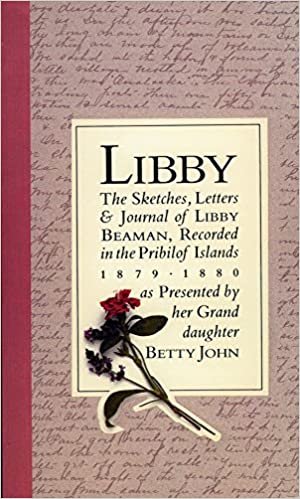
The first piece I developed was the story of Libby Beaman, the first American, the first white woman to set foot in Alaska.  I had stumbled upon her journal from that time that had been published by her granddaughter, Betty John.  I read the journal and was completely captivated by this woman.  


Libby was a free spirited, daring young woman confined by the conventions the Victorian era. She managed to break free of those conventions so that she could use the brains and the talent that were bestowed by her Creator.  It was that daring that allowed her to choose her husband to be and then make that union possible.  It is, indeed, a love story against the backdrop of life in government service during and after the Civil War.

Not long after I had developed this piece, I purchased a biography of Elizabeth Blackwell, the first lady doctor, which held a different appeal than Libby’s.  Her story was inspiring. But then I got busy, really busy, being a single mother and starting over in a land far from home.

Healing story became my focus, and I loved that stories could be a vehicle for it.  It was the subject of my Master’s Thesis, and enriched my work as an addiction counselor. The publication of Distilling Hope: 12 Stories to Distill the 12 Steps, was the culmination of that work, and was immensely satisfying, taking me to the NSN Story Summit to present a workshop.  

At the 2019 Summit, Charlotte Blake Alston gave a truly inspiring keynote about the stories that need to be told right now.  Women’s rights were under assault. Immigration had become politically charged.  Suddenly I realized that Elizabeth Blackwell’s story was very timely. Not only did she live when women were fighting for the right to vote, she was an immigrant.  Add to that the disadvantage of becoming disabled.  A trifecta of issues in one woman’s story.  Charlotte’s keynote, and the conversation that followed it, watered that seed Melissa had planted over 20 years ago. It was time to tell Elizabeth’s story.

The more I get to know this woman, the more I love her. She saw her path to become a doctor as a spiritual journey; doing what she believed her Creator needed and wanted her to do. Elizabeth faced challenge after challenge, persevering despite the odds, trusting her faith. She prevailed. 

As I work to tell Elizabeth’s story, I am reminded of my dear friend Melissa, the seed she planted, her encouragement…and I smile.


Wednesday, July 1, 2020

Virtual Storytelling


This Brave New World of Covid-19 is weird….really weird.  It has spawned all manner of creative solutions to our shared limitations and has allowed us to stay somewhat connected while sheltering in place.  Suddenly performers, of all types, found themselves out of work…out of gainful employment…looking to survive in this virtual world far, far away from any physical stage or platform on this planet. And thus…Virtual Storytelling became a Thing.

Having performed in several of these venues, I have come to the conclusion that Virtual Storytelling is weird.

For most of my life, storytelling has involved the gathering of people for the purpose of entertainment. Perhaps the story’s purpose is to educate, sell, convince, or affirm as much as it is to give pleasure. A storytelling event can allow the listener to escape into that “Once Upon A Time” where good conquers evil, incredible creatures and adversaries a soundly defeated, and love conquers all. Good stories create empathy, and allow us all to remember we are all part of the human race, with human foibles, dilemmas, and downfalls. As a performer, I depend on that connection with the audience to deliver the best possible experience. Virtual Storytelling cannot deliver that in real time.

I sit at my laptop awaiting my entrance onto a Zoom Platform.  It’s my turn.  The Camera is on me. And suddenly…I am telling this story to myself!  Say What???   But don’t look at yourself!  Look up! Directly into the camera. Yes, look at that tiny light just above your screen, so the audience thinks you’re looking at them, even though the only thing I can see is me! So, there I am, telling my story with all the gusto I can muster from a seated position.  Seated???  Yup, seated.  The computer cannot deliver a decent performance that would allow standing, or any large movement.  Even the small motions need to be carefully rehearsed so that a hand gesture doesn’t leave a trail or is too much out of proportion with the rest of me making me look like some mythical creature from Loch Ness. And then there’s the added annoyance of that virtual caution from Zoom itself. “Your band width is too low.”  Great! Like I can do anything about that while I’m telling!  That low band width pixelates the transmission, or freezes it momentarily, which does nothing good to the delivery of said story.  In fact, it creates a robotic delivery for a few moments, or minutes, which is the antithesis of what I trying desperately to do!
The story ends.  There is silence. No applause. No indicator of how the story played, how it landed. Oh wait! There is a chat room.  Lots of comments from the audience members to indicate my success or failure.  I cannot read them while I am telling.  I can only enjoy the comments after the fact.  The immediacy of a live performance in front of real people is gone.

So, I am left with a choice.  To spend my time mourning that which is gone from my life, or accept this Brave New World and be glad in it.  I can be grateful for the 21st century with all its technological wonders or commiserate with the naysayers who whine that life just isn’t the same. No it’s not the same.  But it surely beats the alternative!

In the meantime, watch for my next Virtual Performance…coming soon to a computer near you!

Tuesday, April 7, 2020

Women’s Storytelling Festival

Blog #20:  Women’s Storytelling Festival
Fairfax, Virginia


The first Women’s Storytelling Festival took place March 13 and 14, 2020 in Fairfax, Virginia amid the Coronavirus pandemic.  At that point, people were advised to avoid crowds greater than 250 people. Jessica Piscitelli Robinson worked with the officials in Fairfax to be sure the festival would be compliant with guidelines, should it be allowed to go on as planned.  We got daily emails from Jessica about the status of the festival. 
As of Friday morning, it was on.

So, we went.  We arrived with tempered expectations.  The recommendations and guidelines were changing almost hourly it seemed.  Friday night was held at the Auld Shebeen, which was perfect.  Alas, the crowd was small, and several of the showcase tellers had to back out. That didn’t stop those who were there from taking the stage and giving the audience their best with an interesting mix of material, styles, and stories. I was thrilled that so many local and regional tellers had been included.  It’s so hard to find a way to break out of one niche and leap to the next level, and the opportunities are few and far between.

Saturday, we got a full day of stories, lasting into the evening. Sheila Arnold, Megan Hicks, Jessica Piscitelli Robinson, and Donna Washington, the featured tellers who were able to attend, were glorious.  The size of the audience, which was small, didn’t faze them. We heard historical stories, folktales, and personal stories, each rich and satisfying. There were showcases with different tellers at lunch, and a story swap for audience members who were so moved.   Truly, something for everyone.

It is a relatively small world – storytelling.  The community of storytellers is tightly woven, but never exclusive.  All are welcomed with open arms and hearts. Under the circumstances, we were all careful not to hug and kiss each other as is the way of storytellers.  That part was awkward, and created a longing in me that I hadn’t expected. 
This, too, shall pass.

Here’s what’s really important.  The first, very first, Women’s Storytelling Festival went on as planned and without a hitch.  Jessica Robinson is to be applauded for her vision and her leadership.  I am proud this festival gave the local tellers a bigger audience and a bigger event.  I expect that there will be a second Women’s Storytelling Festival in 2021.

I will be there!


Ben and Lyle

Blog #19: Ben and Lyle

The Ben and Lyle stories are the remnants of a gifted and talented moment I had in between working full time, trying to parent full time, and maintain both a home and a marriage. (I was only successful in three of the four demands on my time and my psyche.) 
One night, when I was so tired all I wanted to do was cry, my younger son, Kyle, pulled out “Good Night Moon” as his story, and the older one, Sven, pulled out “Cat in the Hat.”  While both of these are wonderful children’s books, one can only say, “Good Night chair. 
Good Night noises everywhere,” so many times without coming completely unglued. 
I was there.

The next night, I decided not to read to my boys.  Instead, I told them a story about 2 brothers, Ben and Lyle, loosely based on them and what they had done that day.  Kyle got story time first, being the younger sibling.  The most amazing thing happened.  He was still.  He listened without interruption.  And when I said Lyle was doing or saying something, he would beam and say, 
“That’s me, huh Mom!”

Then I went into Sven’s room, and repeated the same story.  I must admit, the second telling was better than the first, but that’s how it is with storytelling.  Sven figured out right away that he was Ben, and listened as raptly as his little brother. The coolest part of the whole experience was that I could slip in a moral, or a lesson, or talk about hard things without lecturing my kids.
And so began this storytelling tradition in our home.  I enjoyed it as much as they did. We did stories at bedtime almost until middle school, and we all loved it.  When I would go into their elementary classrooms and tell a Ben and Lyle story, they would puff out their chests and announce, 
“I’m Lyle!” or “I’m Ben!”  They were so proud.

 It’s been many years since I invented a Ben and Lyle story, but several of them have survived the test of time.  I tell those stories as the opportunity presents itself.  I have realized that many children deal with the tough stuff in some of those stories.  “Where Did Pop-Pop Go?” is about the death of their grandfather, the first death they had experienced.  “The Other Left” is a story about having dyslexia, and being able to laugh at one’s self.
And some are just fun.

 In “The Magic Crayfish” the boys have a magical friend who helps them solve problems.
Recently, a book entitled, “It’s Hard to Be a Verb!” was given to me by my daughter-in-law. She found it for her son, who has ADHD.  And guess what! Ben and Lyle have ADHD, too!  I contacted the author, Julia Cook, to see if I might adapt it into a Ben and Lyle story to tell from the stage.  
She replied with one sentence: “I would be so honored!”

Now there will be a new Ben and Lyle story!  Stay tuned!

Wednesday, February 12, 2020

Equipment Failures


I have just completed the 16th session of “Reaching through the Cracks: Connecting Incarcerated Parents with their Children through Story.” The culmination of each workshop series is the recording of the stories that the participants have created for their loved ones and transferring them to a CD or flash drive to send.  Those CD’s or flash drives are then sent to the person for whom a mailer has been addressed.  It doesn’t matter to me who they are or where this final product lands.  It is their creative work and I have no rights to it or any say in where it goes.  I do, however, caution the participants not to send anything should any restraining order be in place.

I am technologically challenged, as are many people over the age of 60.  BUT I have never had such a series of equipment failures stalling the mailing of these stories.
I recorded 9 stories on January 21, 2020.  On January 22, I sat down and proceeded to download the stories from the audio recorder to my computer.  There were only 6 stories that could be retrieved. The other three were no where to be found.  I went through every file on the recorder and…nothing.

 Great.

I went to my local Best Buy to see if the Geek Squad could help me find the missing story files.  
 
The conversation went like this…
“Ma’am, how OLD is this (audio recorder)?”
“I bought it in 2008.  It got me through grad school and through 15 storytelling workshops at the detention center and the prison. Never had any problem with it until now,” I said with confidence, 
and just a chard of attitude.
“Ma’am, you might want to retrieve whatever you can and throw this one away.  It may not be dead yet, but its close.”
“Seriously?” I said.  “It’s never given ME any indication that that it was failing.”  (As in, “How dare this audio recorder die! It’s only 11 years old!!! It still has work to do!)
“Uh…yeah...it’s about done.
Just throw it away and get a new one.”
 
“What!?! Buy a new one?”  I was not happy.  Did not want to shell out the price of a new one just then.  And didn’t my audio recorder know that it was beloved?  A valuable part of my storytelling venture?  How could it possibly let me down?
Well, I bought a new one.  I went with the newest generation of the same brand and model.  I left Best Buy a tad poorer than I had been an hour before.   While that problem was solved, the problem of the missing stories was staring at me, and left me feeling quite chagrined.  An equipment failure.  Who knew such a thing was possible? Meanwhile, I made the CD’s for the six stories I was able to download and mailed them.
I had to contact the prison and explain the situation.  Fortunately, my point of contact had no problem with my coming back and meeting with the three participants whose stories disappeared into those digital Netherlands. As it turned out, they were actually pleased to have a second chance to record and were most pleased with their performances.  Whew!
I came home and sat down to complete the remaining CD’s.  Downloading from the new audio recorder was much simpler than before which was awesome.  Then I plugged in the external DVD Writer to my laptop.  That funny little noise that says, “I’m connected!” was music to my ears.  I opened Windows Media Player to burn the drive and….
It didn’t recognize the DVD Writer.  My laptop did not believe there was anything plugged into it besides the mouse, and the mouse certainly doesn’t know how to burn a CD!  I was confounded, and not very happy.  We had spent a bunch of money for the Geek Squad total protection so we would have help for just this kind of situation. So, I called the Geek Squad for help. It took an hour on the phone for me to get to the technician who could perhaps fix the problem.  After all, didn’t I know that the DVD Writer could be bad and the agreement didn’t cover that?  WHAT?!?  It took the better part of that hour to convince him that the DVD Writer was working just fine and that it was my laptop that was the problem.  After all, just a week ago it was working just fine.
Finally, there was an agent who diagnosed the problem and fixed it. HURRAY!  Turns out that a new driver needed to be installed, which really isn’t a big deal if you know to look for one. I sat down and quickly burned the remaining CD’s and put them 
in their respective envelopes.  
And Series #16 can be put to bed.
I realize that none of you reading this have ever had such experiences, but perhaps you know someone who has.  Please let them know they are not alone!

Friday, February 7, 2020

Grow or Go

One of the phrases I often heard in my early sobriety was “Grow or Go!”  While I haven’t heard it much in a long time, it is that slogan (or admonition, perhaps?) that keeps me engaged in the recovery process.  
It applies to other areas of my life as well.
I have just completed another 
“Reaching through the Cracks…” storytelling workshop at the prison, my 16th, in fact.  After the 15th workshop, I published and copyrighted the curriculum in the hopes that if I shared it with enough people, maybe some of them would try and replicate the workshop.  Little did I know that I would continually need to adjust and adapt my precious curriculum to meet the participants where they are.
There is research that indicates the majority of those currently incarcerated have a substance use disorder which led to their incarceration.  Whether it is a direct  or indirect cause of incarceration isn’t always clear.  Given that, my own history working in the addictions field, and my experiences with “Reaching through the Cracks,” led me to make addiction and recovery a large part of the course content and story making. Until now.
There is a dreadful lack of addiction treatment services in Maryland prisons.  Only a tiny percentage of inmates receive any treatment at all, so the vast majority of them simply kill time while they are wards of the State, and never address the issues that led to the behaviors that led to incarceration.  Most of the participants in “Reaching through the Cracks…#16” fell into that category.  
I was stunned.  They were stunned that I was stunned.  
And then several of them dropped out…never to return.
I had to step back and let go of any attachment I had to my precious curriculum that was conceived in love, just like a baby.  When I was able to do that, I realized their defenses were high.  Their definition of an addiction was limited to substances, but did not include alcohol or marijuana.  They did not believe in process addictions like gambling, sex, drug dealing, or the like. Any statement that could be construed as passing judgement on them and the path that led to their incarceration was met with denial and hostility.  I was at a loss.  How to connect with them enough to proceed with the business of story making baffled me.  Finally, I gave in to their positions, and simply asked that they reflect on the path that led to their incarceration.
In the past, those addiction stories were re-framed to be age appropriate for their children, so instead of real-life characters, animals could be used.  Sometimes, the language of fairy tales with knights in shining armor and princesses and dragons was used.  Sometimes a super hero motif was used.  I had always been delighted with the end results.  I had no clue how this set of stories would manifest. Would they even craft a story?  
I held my breath.
The day that we recorded, we had 9 participants show up and record their stories.  Even the most resistant and defiant participants put their egos in their pockets to create something unique for their children.  And truth be told, each and every story was about bad decisions, bad choices, and having to deal with them.  These stories weren’t so very different than the stories of those who owned their addictive behavior and wanted to pass on wisdom that they had not been given growing up.  I was not only delighted, I was blown away, which I shared with them.  As they left for the last time, I had to wonder how much I had missed by using the research about them instead of responding to them.
As I left the parking lot that day, the slogan, “Grow or Go,” floated across my consciousness.  I had to grow to continue to be successful in this setting with this clientele.  It really doesn’t matter what I know about incarcerated people.  What matters is that I get to know them, and accept them for exactly who they are, and who they are not.  I can continue to pray that they find recovery, and find the sweetness of a life well lived inside the laws of the land.
To be continued. Series #17 begins March 10.


Friday, January 31, 2020

Blog 16: A Story Well Told


Today I was part of the Winter Institute at the MAC, Inc. Area Agency on Aging and it was a delightful experience. The description of my program included, “come experience the magic of a story well-told.”  
I didn’t know that would actually happen.
A bit of background. In 1996, I performed as a storyteller for the very first time, ever. A storyteller named Beth Vaughn gave me that first opportunity at a time when everything in my world had fallen apart and I needed something wonderful to happen.  The Potomac Celtic Festival happened in June, in Leesburg, VA and it was a massive two-day festival. Sadly, that festival has gone the way of many such events, but it was a grand affair in 1996. Over the course of those 2 days, I told a total of 4 times, and then closed the festival in an olio with all the tellers participating.

That final olio was emceed by Michael Gaudreau, a storyteller from Baltimore. Michael was not the typical emcee. He was far more creative than that.  He used the Irish folktale, ”The Man who Had No Story” as an umbrella tale. In the story, Brian O’Braonachiain, a basket maker, depletes the supply of rods for basket making in all the surrounding villages. In desperation, he goes to Alt an Torr for he hears there are rods to be cut, despite the warning that Alt an Torr is a fairy glen. Brian is pulled into the land of the fairy and finds refuge in a warm cottage with a kindly old man…until Brian confesses that he has no story to tell. Then, Brian is magically kicked to the curb but once again finds refuge.  This time, he stumbles into a wake, and at the insistence of the woman in charge, does things he swore he could not do with people he swore he did not know. When he is transported back into his own time, he no longer wants to cut rods and make baskets. He just wants to tell the story of all that befell him in the land of the fairy.
Michael wove each and every teller into that story. I didn’t remember how he did that, but that experience was etched upon my heart, to be pulled out 20+ years later.
When I was invited to be a part of the Winter Institute at MAC, Inc. Area Agency on Aging, I needed to come up with a 90-minute program. Ninety minutes is a very long time to be telling stories without a break, and part of the idea of the Institute was that some kind of learning take place.  After calling on my Muse to help me, the idea for the program emerged.  I would tell stories for the first 40 minutes, have about 30 minutes of interactive, spontaneous storytelling among the audience members to coax the closet storytellers to show themselves, and then incorporate those stories into “The Man who Had No Story” to end the program, just as Michael Gaudreau had done all those years ago.  Once I found printed versions of the story, I began to look for the exact place where Michael had incorporated the storytellers in his tent. I realized that there would be no weaving of storytellers.  There would need to be a substitution.  What part of the story could be cut so that other stories could be added?
I decided to cut the experiences Brian had at the wake were cut from the story, in order to add the stories of the participants…which gave a slightly different ending to the story. I had distributed story prompts from Donald Davis’ gem of a book “Telling Your Own Stories” among the audience members.  They were given time to share the story that the prompt brought to mind in small groups of three. As they were creating these stories with strangers, the energy in the room changed. The room was alive…charged with positive energy…warmth…love.   I then asked for the closet storytellers to come out and make themselves known.  There were three.
I launched into “The Man who Had No Story” trusting the power of story to manifest in these three tellers.
The first story that was shared was the story of a blind chicken that had been brought to her to be rescued. With the help of her 8-year-old grandson, the chick was saved and allowed to grow and mature.  She and her grandson had become most attached to this bird, and when they went out to the chicken coop one morning to visit, this American Beauty chicken laid her first egg.  It was blue. The chicken not only survived, it thrived! There is a photograph of her grandson holding this first blue egg.
The second story was the story of how this woman made her father proud. She talked about his high standards and the feeling that she could never measure up to those standards… until she did.  She broke away from the family business and started her own business. It was the same type of business, but it was hers.  By now her father had retired, so she wasn’t competition for him, but she was still his daughter.  He drove his truck to her place of business every day to watch her progress.  When he could no longer walk, she bought him a wheelchair so that he could go inside and see her place of business. As she wheeled him through, he said to her, “This is the best business I’ve ever seen.”  She had finally won his praise and made him proud.
The third story was about the first major purchase that this woman had every made.  She had wanted to purchase an electric typewriter so that she could more easily type her papers while in college.  It was a major purchase back then.  Her father said that he would pay for it, but she had to pay him back.  At that time, she was working in the library part time making 75 cents/hour.  It took a long time to pay Dad back.  But she did, and it taught her that nothing comes for free. And oh, by the way, she still has that typewriter.
The Muse was in the room. I channeled that energy. Three stories from the heart. Spontaneous. Wonderful. The power of story connected us and made magic.
Tell more stories. It creates the intimacy we crave and it doesn’t cost a thing.

Thursday, September 19, 2019

If Not Now, Then When, Beth?

If Not Now, Then When, Beth?

I have been performing since I was 7 years old, playing Gretel in a musical version of the fairy tale. I know
the safest place on the planet is a stage, because the audience is waiting for you to be wonderful. I
know that leaping from the local arena to the national arena is a huge leap, and that opportunity comes
rarely, if ever. When I was directing shows on a regular basis, I wanted to make the leap from the local
theatre community to regional theatre. Couldn’t figure it out. Couldn’t find the opening, which I found to be frustrating and disappointing.

When I shifted from theatre as my creative outlet and expression to storytelling, I was content to be a
large fish in a very small pond. I was content to teach storytelling and facilitate workshops because of the difference it made to the participants. And then I entered Act III of my life.

I am 69 years old. If not now, then when, Beth?

I finished my Master’s degree in storytelling when I was 61 years old, in 2011. To celebrate that
milestone, Mylinda Butterworth and I traveled to Utah to the Timpanogas Storytelling Festival. I had
never been west of the Mississippi River. I was mesmerized by the enormity of the mountains and the
vastness of the landscape. We challenged our bodies (that live at sea level) to climb the mountains to
the Timpanogas Caves. And then we went to the Timpanogas Storytelling Festival.
Mylinda and I had just completed a 5 day intensive workshop with Antonio Rocha and Milbre Burch at
ETSU, and both were performing at Timpanogas. We felt privileged to know some of the tellers
personally. loved every minute of the festival. We laughed until we cried, and cried until we laughed.

And we said to each other, “Someday, I will tell at this Festival.”

For several years, I had visited the Timpanogas Storytelling website, and thought about applying. And
then that little voice inside said, “If not now, then when?” The audition process included having a
professionally recorded story – either audio or video. I had made the Distilling Hope CD in 2017, and finally had that professionally recorded piece. I applied.

I was accepted.

I was one of 2 tellers chosen for the TimpTells Teller slots. When I received the letter inviting me to
come as a teller, I had to give the letter to my beloved to read…just to make sure I was reading the black parts on the page…not what I wanted to read. It was real.

“I am not giving away my shot!” which is the opening line from ‘Hamilton” became my mantra. I had
this one shot on a national stage. It was an honor and a privilege to be there. I wanted to give it my best shot. So I asked for help.

Asking for help is not my strong suit. I did it anyway. In a workshops at the National Storytelling Summit,
I had discovered 2 personal stories. I asked Andy if they were worthy of the Timpanogas stage. “Oh
yeah!” was his reply. I asked Donald Davis for his advice. He said, “Tell original stuff. That will make you
stand out.” Donald also encouraged me to have 4 stories prepared just in case one that I planned
wouldn’t work following another teller. I arranged for Andy to coach me. In a weekend intensive, I
road tested those stories. We realized that one of those stories would work, and one would not. I had
to find another story. I searched my repertoire for another original story that I knew like the back of my
hand. I agonized over that choice. Finally I settled on a ghost story I had created for Furnace Town, a
living history museum, and a Scottish legend. I prepared all 3 and worked hard. I had a dress rehearsal
at my home with 15 friends. I called another storyteller shared my stories, and got feedback.
We flew to Utah for the festival. I was giddy with excitement. Finally, I stepped onto the stage, and I
was home. I remembered the feeling of being onstage and giving my best to an audience so that they
may be temporarily suspended in time, transported to another realm, and dancing with me as audiences
do. For the first time in a long time, I trusted my preparation and my talent to make the experience memorable. I succeeded.

Back at home, the Timpanogas Storytelling Festival seems like a dream, a fairy tale, a silver box
experience. The memory is stored in the silver box in my heart. The coach has turned back into a pumpkin. The dream recorded on this page.
Many thanks to everyone who made this dream come true.

Monday, September 16, 2019

Recording for Race Bridges Studio

Blog 11:  Recording for Race Bridges Studio

I had just finished a story that had been cooking for several years. It began in a workshop with Megan Hicks, and went to subsequent workshops with Donald Davis. It captured a painful memory for me about wanting to date a black fellow student when I was a senior in high school is 1968, and the serious fallout that occurred when I broached the subject with my parents.
Several months before the National Storytelling Summit, Sue O’Halloran sent all of the presenters an email asking if we had stories about civil rights that we would be willing to share on the Race Bridges Studio website. If so, would we please send her a copy?  Sue is part of this non-profit organization that provides free resources to educators, leaders, and parents to “explore the challenge of creating bridges of cooperation and community in a very diverse and often polarized world.”

The timing of her request was not lost on me. This website gets tremendous traffic, and I couldn’t purchase that kind of marketing. Was the Muse rewarding me?  Maybe my story was worthy of being posted.  Self-doubt is often a companion of mine, but despite all doubt, I sent the story off, thinking, “If not now, then when, Beth?”
Susan loved the story and wanted me to record it for the website.  And what an opportunity!  There would be a professional hair and make-up artist, a professional photographer, and a professional videographer at the NSN Summit to record our stories.  AND…the photos and the video would belong to the tellers.  The tellers would give Race Bridges Studio permission to use them! I was beside myself with excitement!
The taping was Saturday of the Summit. When the make-up artist was finished with me, I burst into a chorus of “I feel pretty! Oh so pretty!” from West Side Story.  I was giddy with excitement.  In fact, I was so flustered that the initial recording of my story was 11 minutes.  Susan was concerned.  “If a story is longer than 8 minutes, people don’t listen.  Let’s record this again in a bit.”
The second time we recorded my story, it was exactly 8 minutes long.  I was elated!  Susan was as generous as she was professional.  I am so grateful to have had this experience.  Thank you, Susan!


RaceBridgesStudio.com is a communications ministry of the Chicago Province of the Society of the Divine Word.  The Society of the Divine Word (S.V.D.) is an international religious Order of the Roman Catholic Church. The materials on this site are nonsectarian in content and are meant for wide use by people of faith or no formal faith in the common task of building bridges of understanding and cooperation between very different peoples.
Please visit their website: RaceBridgesStudio.com


Tuesday, September 10, 2019

Inspiration

Blog #10

Inspiration
At the National Storytelling Network Annual Summit
Fresno, California
July 25-28, 2019


The annual gathering of storytellers at the NSN Summit is a rich and diverse tapestry. Storytellers of all levels of experience, from brand new baby storytellers to the veteran and world famous, gather to share their love of story and the myriad of ways it can be experienced and learned. Here are the highlights from my trek to the West Coast.

One of the first tellers to cross my path was Michael McCarty, a teller from California who works in prisons just as I do.  I was having breakfast with Donna Washington, a storyteller from North Carolina, when Michael joined us. 
“You’re Michael Mc Carty! You work in prisons!  I wanted to meet you!”
“And you’re Beth Ohlsson! I include a copy of your article from Storytelling Magazine when I hand out information on my program in prisons! I wanted to meet you, too!” I was dumbfounded, to say the least. 

Michael works in 11 prisons in California, and considers it a ministry of sorts.  He also believes in giving away books, materials, and himself in search of the stories that will heal the broken souls in our prisons.  He is a person in long term recovery, as am I, and an absolute inspiration. We were old friends just who hadn’t met yet.

From there I went to a master class, “The Magic of Podcasts” with Anna Sussman, Managing Editor and Senior Producer of “Snap Judgement” which airs on 400 NPR stations.  It was a crash course in creating meaningful podcasts, full of practical advice and guidance from a woman who has reported on the ground in 15 countries.  Again, an absolute inspiration and call to action.

The keynote address by Charlotte Blake Alston was another call to action.  She said that the stories she tells, and encouraged us to tell, go “from the middle of me to the middle of you” …right to the heart.  She was adamant that telling the stories of our nation’s history is critical to the times in which we find ourselves, as those who do not know the history of our land are doomed to repeat it.   Almost 20 years ago, I had begun work on the story of Elizabeth Sewell, the first woman doctor in the United States, and shelved that project.  Charlotte’s talk nudged my Muse, who then nudged me, to pull it back out and finish it. Thank you, Charlotte!

And then there was my workshop.  I presented “Reaching through the Cracks” my prison storytelling program to 14 storytellers.  I had written and printed my curriculum so that anyone who would be so inspired could replicate it.  The word of mouth of those 14 storytellers inspired requests for 14 more copies of the curriculum!  Woo-Hoo! Planting those seeds was immensely satisfying!
I can only hope that those who do create a prison program in their home towns will let me know of their successes and challenges.

There is so much more to tell. In the course of attending other workshops, I discovered 3 new stories that are begging to be told. Thank you Anna Sussman, Andy Offutt Irwin, and Liz Mangual and Bob Kanegis! The discovery process is such a joy!

So my friends, rest assured that the National Storytelling Network will reconvene next summer in Atlanta, Georgia, to inspire us all once again!


Wednesday, July 3, 2019

Loving Yourself Into a New Story

Several times in June, I was asked to bring my particular point of view about recovery into new venues.  Both organizations wanted me to propose a new point of view about recovering (from something) and adopting a new perspective about the journey ahead.  Both presented a challenge.
One organization wanted me to take a workshop that I had facilitated previously and make it fit into a theme that seemed like an impossible stretch to me.  The other organization had nothing to do with recovering from a substance use disorder, but had everything to do with recovering from a life threatening and potentially fatal disease.
After all was said an done, it simply came down to one simple strategy - Loving yourself into a new story.  So many of us come into recovery, or into some other difficult and challenging period of time, with very little idea of what loving one’s self is all about, and how very necessary it is.   
I came into recovery with no idea of how to love myself.  Not only that, but I had so little self-awareness that I had no idea what my favorite color was…or my favorite food…or my favorite anything. My self esteem was based on what you thought of me, how hard the accomplishment was, and what the acknowledgement of that accomplishment might be.
When I found myself at my “bottom” (what I hope will remain the lowest point of my life) I had no idea who I was dealing with.   It took months of painstaking self-examination through re-working the 12 Steps that I began to understand who and what I am.  I had to learn that taking care of me meant having more to give, not less.  I had to learn that taking care of me sometimes meant saying, “No,” and that “No” is a complete sentence.  I had to look at the choices I had made, the times I sold out, and the fantasies I had been chasing.  Then I had to find the good parts of me.
Then I recognized what I had really accomplished in my life, and that selling myself short didn’t serve me.  I recognized that the best example I could set for my sons was to be a sober, relatively successful, and happy human being so that they would know what that looked like.  I had to re-frame my life as an heroic journey.
Which is what I shared with both organizations.
I hope I was successful.

Thursday, June 13, 2019

LOCKDOWN!!!!

LOCKDOWN!!!!
Trying to teach an 8-week course that has a rhythm and a momentum of its own is damn near impossible when the prison routinely locks down. When a facility is locked down, the inmates are in their cells for 23 of 24 hours. A lockdown can happen as a disciplinary measure for a part of the facility, or the entire facility may be locked down as it was for 9/11.  The length of the lockdown varies and does not appear to be predictable.
My latest session of “Reaching through the Cracks” began March 5, and was scheduled for 8 consecutive weeks.  We completed the workshop May 28, 13 weeks later. Frustration doesn’t begin to describe the feelings of powerlessness that I get from the early morning call that says, “Prison is locked down.  No class today.”
In all fairness, we did miss a week because I was in Portland, Oregon at the Writers and Publishers Conference 2019.  I haven’t yet learned how to be in two places simultaneously, despite my best efforts!
That being said, it is disconcerting to see how little control the staff has over the continuity of its programs.  I understand that maintaining control in order to ensure the safety of all is paramount. But I cannot express how horrified I was to hear the warden of a detention center say that, “a good day is when everyone goes home alive.”
The inmates don’t go home.
Intellectually, I know that rehabilitation is supposed to happen through the programming available to the inmates.  However, when the rhythm and the momentum get disrupted by a lockdown, the attendance drops. Why, you ask? Because when a week or 2, or 3, or 4, or even 5 is missed for whatever reason, the class loses its importance.  Sometimes, the participants forget, or go to recreation, or simply don’t get called by the correctional officers assigned to the blocks or tiers. Sometimes, they don’t get called by the CO’s because the CO doesn’t deem the particular class a mandatory one. Sometimes why the participants aren’t called for a class or a group remains a mystery.
Rehabilitation doesn’t happen in a cell, or on a block, or on a tier.  It happens through education, treatment for addiction and/or mental illness. It happens through programming that gives new meaning to a life derailed by the conviction of a crime. That could be attendance at religious meetings or services, attendance at support groups, or peer counseling. It happens when someone cares.
It’s hard to know anyone cares when everyone is locked down.


Thursday, May 23, 2019

Book Signings


One Day at a Time Gift Shop, Rehoboth, DE

When I was at the Association of Writers and Publishers in Portland, Oregon in March, I witnessed book signing
after book signing. People just lined up to get a book signed. I had dreamed of such events for
“Distilling Hope: 12 Stories that distill the 12 Steps”.  With 22 million people in Recovery and another 22 million
who could be, or should be, I thought that people would flock to my work in droves, clamoring for a signature that
would increase the book’s inherent value. My naivete was obviously showing.
Book signings can be very strange events, especially as an unknown with a published work about the Recovery
process.
But then, there are the gems hidden in the nooks and crannies of the Recovery world.  
I was privy to one of those nooks, and it was just delightful!

Amylynn Karnbach has a lovely shop in Rehoboth Beach, Delaware geared toward the 22 million in recovery.  
While I doubt all of them will frequent her business, those who do are the precise audience my work needs.
Amylynn had an open house to celebrate her first year in business and invited me to tell stories and do a book
signing.  It was a beautiful spring day, and Amylynn had set up the patio entrance for a garden party, complete
with chairs, tables, and abundant food. As the afternoon wore on, people drifted in and out of the store, and I
drifted in and out of the storytelling. I told the stories from the book as an unabashed effort at promotion.
Books were sold, and signed, connections were made, and a good time was had by all.